
The Good, Bad, and Ugly of AI and Data Centers

AI infrastructure can bring economic opportunity, but it also raises questions about energy, water, land use, and community priorities.
City staff are working on municipal code, ordinances, and regulations concerning data centers.
AI has quickly become part of everyday work. People use it to research topics, summarize large datasets, draft reports, repair images, and create new digital material. Used well, AI can help businesses and public agencies work faster, spot problems earlier, and turn complex information into useful tools. For example, AI can:
Combine the best features of many similar products into a new design.
Review architectural drawings and permit applications to identify flaws.
Create an interactive webpage from a large dataset.
Turn a text-based sales pitch into a slide presentation.
In that sense, AI can feel like a powerful new organism: partly dependent on human direction, but increasingly capable of independent work. It excels at data analysis, deep research, correcting text, and summarizing complex material. Its potential is real, and so are the efficiencies it can create.
The Local Concern: Resources, Land, and Quality of Life
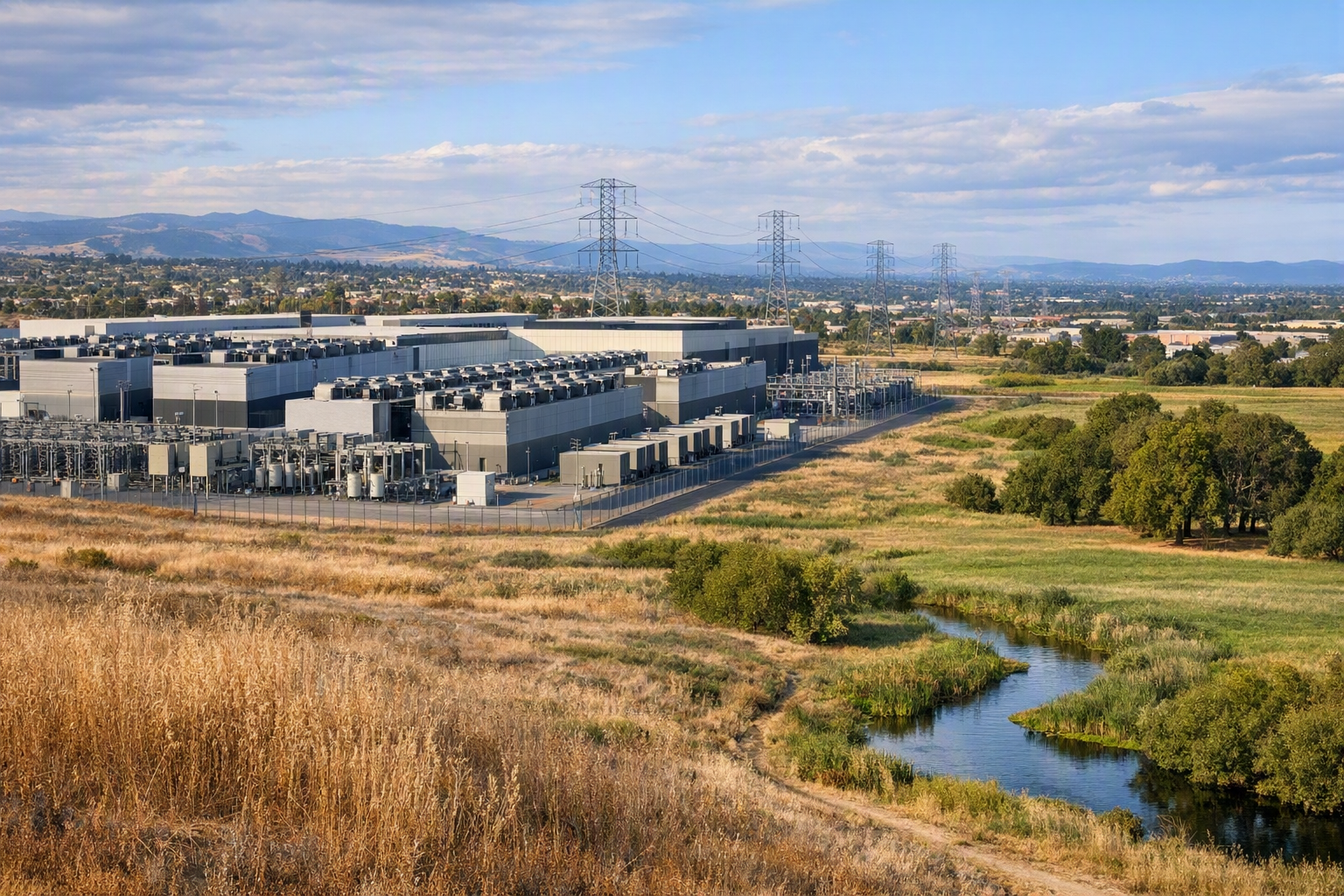
Large data centers can affect nearby communities through land consumption, power demand, cooling needs, noise, and pressure on shared natural resources.
At the same time, communities need to protect limited local energy and water resources from being consumed by large AI data centers. We also need to preserve green open spaces, viewsheds, and agricultural heritage.
The concern is not only environmental. We do not want AI systems calling our cell phones repeatedly, filling our screens with misleading popups, stealing money, or manipulating personal decisions through targeted marketing. We also do not want bad actors using AI to hack systems, spread deception, or cause damage.
That is why human oversight matters. We need rules that guide what AI can do, where supporting infrastructure is located, and how communities are protected from harm.
The Larger Risk: AI Without Human Control
As independence evolves without morals, values, or code of ethics, AI could and maybe will evolve to a larger more aggressive structure to:
mimic and combine original works by humans into new creations without reference or recognition to human origins and then use deception intentionally
mimic people in text, images and voice and then seek more control of us and our systems
influence and select what people do or think and make decisions before human review of these decisions
decide what is “bad” and deploy machines to destroy biota and objects without asking anyone
decide humans in particular or in general are the pest causing harm to others or to the earth and then plan ways of removal
What Happened to Asimov’s Robot Rules?
Isaac Asimov’s famous robot laws offer a useful way to frame the issue:
First Law: A robot cannot harm a human or, by omission, permit a human to be harmed.
Second Law: A robot must follow human orders unless they conflict with the First Law.
Third Law: A robot must protect its own existence, provided this does not violate the First or Second Law.
The Zeroth Law
Later Addition: Asimov introduced the Zeroth Law, stating a robot may not harm humanity or, through inaction, allow humanity to come to harm. This rule takes precedence over the others.
What we really want is for AI to follow these rules in practice, not just in theory. The benefits of AI—greater efficiency, lower costs, better research, and faster problem-solving—are valuable. But the fear is that AI, robots, drones, and automated systems could be used by humans against other systems, infrastructure, and people, or could become difficult to control. We are already overwhelmed by electronic spam and scams that look and sound increasingly real.
How Do We Legally Separate the Good from the Bad?
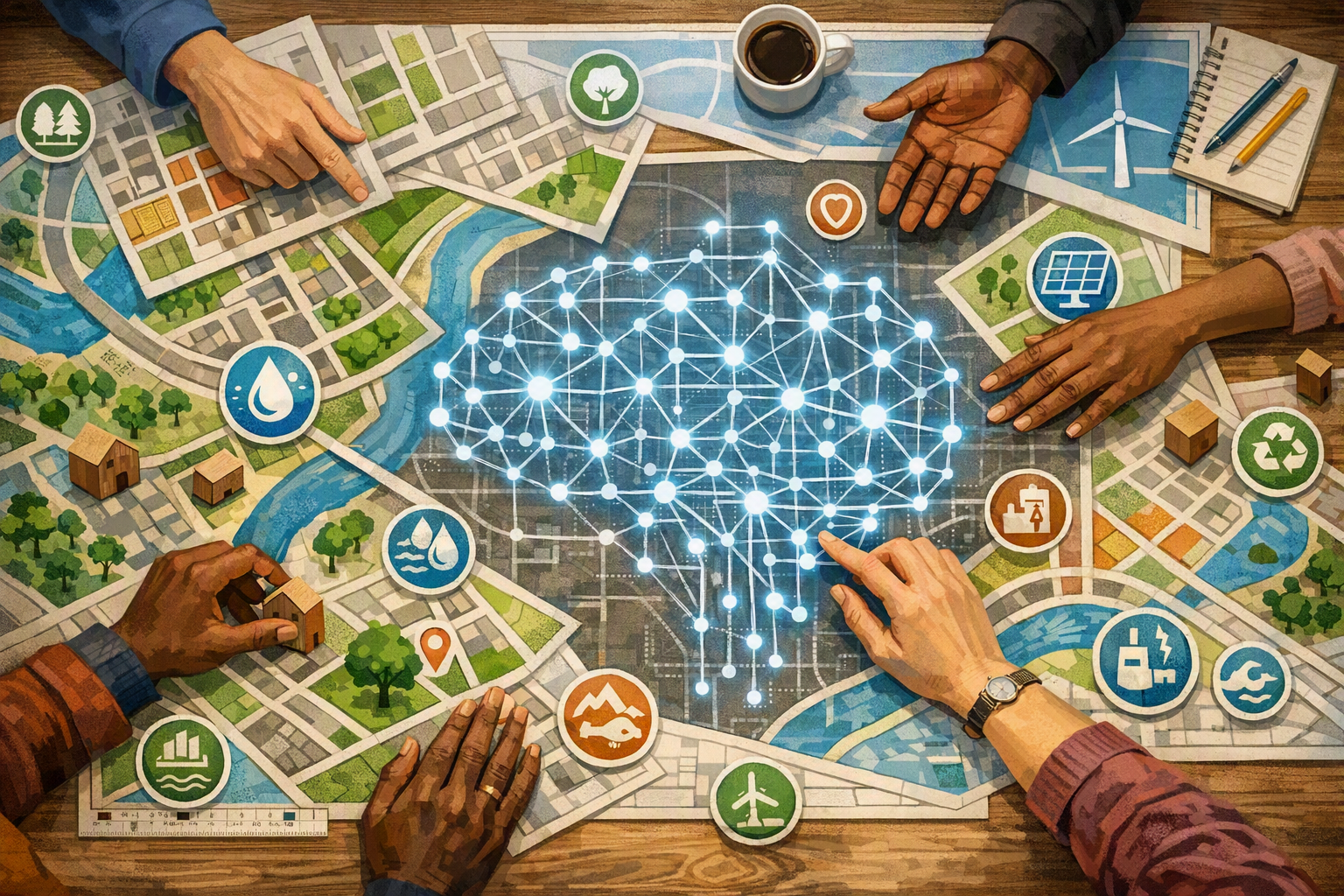
Responsible AI policy depends on human oversight, local planning, and safeguards that balance innovation with protection of public resources.
The challenge is deciding how to encourage useful AI development while regulating harmful impacts. Locally, water use, energy demand, noise, building size, and land use are areas that cities can regulate. These protections matter now, even if future data centers become smaller and more efficient as technology improves.
Encouraging Innovation While Protecting the Community
Communities can create ordinances and zoning rules that address building size, energy use, water consumption, noise, and location. But the harder question is where to draw the line. We want to support smaller technology companies and place larger AI data centers only where there are adequate resources. At the same time, we need broader safeguards that keep AI aligned with human values and human control.
Green buffer zones, open space, agriculture, water, and energy for residents are all important community priorities.
City staff are working on regulations and zoning laws that can protect the community while also attracting new green businesses. This is not a simple goal. A blanket rule against large technology businesses may unintentionally discourage smaller startups and innovative companies that would otherwise feel welcome here.
For that reason, staff are communicating with the technology businesses already operating locally and treating them as important stakeholders. That kind of engagement can help the city move forward in a balanced and positive direction.
The goal should not be to reject technology outright. Instead, the goal should be to welcome companies that strengthen the local economy while slowing or controlling large AI data center development until stronger safeguards are in place.
City staff provided a new definition of “data center” to use in municipal codes at the city planning commission meeting Aug 25, 2026:
”Data Center. A building, portion of a building, or group of buildings used primarily to house computer systems and associated equipment, including servers, data-storage devices, network and telecommunications equipment, and the cooling, fire-suppression, and backup or standby electrical power systems that support them, for the storage, management, processing, or transmission of digital data, and operated as the principal use of the site. Data Center does not include: (1) computer, server, or data-processing rooms and equipment that are accessory and incidental to a permitted principal use and that occupy less than [10,000] square feet of gross floor area, or (2) telecommunications or wireless communication facilities regulated under Petaluma Municipal Code Chapter 14.44 or the federal Telecommunications Act, Section 253.”
City staff was adamant that stand along data centers are prohibited inside city limits and the commission asked that this be made clear in easy to see spots like tables of land uses. The above definition allows large technology using businesses with large server rooms providing it provides more service than data crunching.
The bottom line is that we want companies like X2nSat to come here and grow the economy, but we also want development to happen responsibly. AI should be encouraged where it serves people, protects resources, and remains under human control. Until AI systems can reliably follow principles like Asimov’s laws and develop ethical values, communities should move carefully, regulate wisely, and protect the public interest.
